
Ghosts of the Forest
| Originally Performed By | Ghosts of the Forest |
| Original Album | Ghosts of the Forest (2019) |
| Appears On |
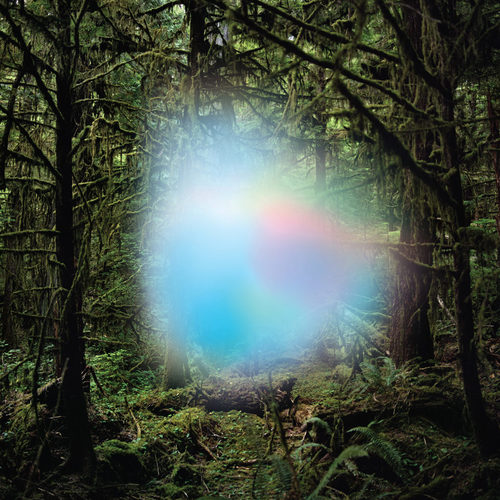
|
| Music/Lyrics | Anastasio |
| Vocals | Trey (lead), Page (backing) |
| Phish Debut | 2019-12-04 |
| Last Played | 2019-12-04 |
| Current Gap | 273 |
| Historian | brendandriscoll |
| Last Update | 2026-03-21 |
History
The second half of the twenty-tens was a period of high creative output for Phish frontman Trey Anastasio. Following its low moments in the prior decade, Phish was going strong again, as demonstrated by their successful 237-song Baker’s Dozen MSG run in 2017, among other highlights.
When he wasn’t focused on Phish, Anastasio poured himself into TAB, orchestral ventures and other side projects. He’d successfully recovered from addiction, cultivated new capacity for wonder and rediscovered his all-important sense of humor.
But Anastasio, now in his mid-fifties, was also increasingly surrounded by–and drawn to–themes of loss, transformation and death. He’d lost his sister Kristine in 2009, his oldest friend and hijinks-companion Chris Cottrell was dying of adrenal cancer, and another old friend, keyboardist Ray Paczkowski, had been diagnosed with a brain tumor.
Surrounded by loss, and questioning what his life would become in the absence of his loved ones, the newly sober Anastasio envisioned a different kind of project, an “emotional journey” that would channel his grief, memorialize the departed, and redefine his identity in this liminal moment. (“He was my tether to childhood and to a life before Phish happened,” Trey explained, referring to his friend “C-Cott.”)
The result was Ghosts of the Forest, an album and limited-run performance-project that appeared rather suddenly in early 2019 (and hasn’t appeared as an ensemble since). Carefully composed yet simpler in its musicality than Anastasio’s usual fare, Ghosts of the Forest doubled down on its creator’s guitar-forward tendencies and blues-rock roots, while taking new musical risks: among other things, abundant nature sounds, and gospel-tinged vocal harmonies, voiced by Jennifer Hartswick and Celisse.
Ghosts of the Forest’s lyrics explored a new vulnerability, openly describing strong feelings of bereavement and sadness that a Phish album might have addressed more abstractly–or avoided altogether. Ethereal, otherworldly, and unsettling, Ghosts of the Forest represents a moment of middle-aged catharsis in Anastasio’s catalog, a raw and beautiful work that at the time of its release exposed sides of Anastasio that he was not used to showing, and audiences were not used to seeing. “I went through a period of deep self-doubt after recording it,” Anastasio is quoted as saying. “I didn’t want to put it out. Maybe I was scared.”
The song “Ghosts of the Forest” (as opposed to the ensemble, or the album–the name is used for all three) is the lead-off track on the album and the first step into the deep woods of Anastasio’s grief. We begin with the synthesizer, holding an eerie echoing sustain, but quickly the guitar appears, a somber C minor chord arpeggiated from high to low.
Video by Trey AnastasioGet in, get out, sings Anastasio, his first lyrics a cryptic mantra, filtering through intense reverb over a descending C-minor progression. What are we getting into? What are we getting out of? The words echo. Get in, get out / Get in, get out / Get in, get out
The first verse suggests continuities and connectedness, intimacy even–but also a sense of foreboding. I know you know that you are me / And I am you, and we are here / And you're the one to take me down / So take me down, take me down
The descending progression continues, C minor to E-flat to B-flat to F; back to E-flat to B-flat to G minor, resolving tentatively to a restless G-sharp. The whole progression repeats, and repeats again, its ominous swirl anchored by a prominent bass line, played by bassist Tony Markellis, who upon his death in 2021 Anastasio would describe as “the heartbeat to so much of my life.”
Walk slowly, step and you can listen while you drown / So quiet I can almost hear my pulse in my hands
A tension emerges between the desire to engage deliberately–to walk slowly; to listen–and the risks of what we will encounter, things that may happen to us despite our efforts to control our situation. Drowning, with its feelings of suffocation and helplessness, is a powerful metaphor for profound grief. The quiet mentioned in the lyrics is not mirrored by the underlying instruments. Anastasio’s guitar offers some reassuringly bright-textured guitar fills. But the descending progression continues, inexorably, as we swirl into the chorus:
Ghost of the forest / Ghost of the forest / Ghost of the forest / Ghost of the forest / I can feel it all unwind / I remember when the stars aligned / Now I'm tumbling blind
But the second time through the refrain, the song turns. Whatever fragile equilibrium might have existed up to this point, whatever supposed balance we might have hoped for as we entered the forest, is dashed by our encounter with the ghost–whoever, or whatever, that may be.
Maybe it’s an elk? Elsewhere, Anastasio has shared a story about his dying friend’s affinity for elk hunting, and the change in his personality that Anastasio observed after Cottrell finally killed one. The elk can symbolize resilience, survival, endurance, and connectedness. Indeed, Anastasio has suggested, that he attempted to write from the perspective of an elk:
“...the very beginning of the album–the very first lyrics of the opening song–was my attempt to write from the point of view of the elk, as Chris and the elk make eye contact in the woods: “And you’re the one to take me down, so take me down.”
But the forest is dark, and the ghost we are encountering may be far more monstrous.
The progression changes–there’s an F# in there now, and a C#–and additional layers with new sounds, ambiguous and echoing, swell from the background into the foreground. Our swirl swerves into a spiral:
I'm drowning in my own mind / I'm drowning in images / I'm drowning in thoughts / I'm drowning in bitterness / I'm drowning in memories / I'm drowning in anger / I'm drowning in regrets / I'm drowning in hatred /I'm drowning in yesterday / I'm drowning in tomorrow / I'm drowning in my own mind / I'm drowning in my own mind / I'm drowning in my own mind / I'm drowning in my own mind
The most intense moments of the Ghosts of the Forest album, and the catharsis they yield, are yet to come. The song “Ghosts of the Forest” is a prelude, setting an anxious, searching tone and hinting at all that is at stake here in the forest: stability, sanity, and perhaps even survival.
The song “Ghosts of the Forest” opened each of the nine full performances of Ghosts of the Forest in April 2019. One commentator reported that the opening track, “served as an elegant, haunting induction to a whole new universe..If you weren’t ready to accept the reality of ‘drowning in bitterness…memories…anger…regrets…hatred,’ then maybe this wasn’t for you…I can’t speak for everyone in attendance, but I felt a palpable sense of unification right away.”
Overall, the new music seemed to polarize Phish fans. Some likened it to a religious experience, a unique and special experience, or a “work of art” that brings you to tears. Others found it too melancholy, or too composed for their taste. There was widespread consensus, however, that Ghosts of the Forest was unique, different from both TAB and Phish. The vast and compounding grief associated with the COVID-19 pandemic would soon grant the album new poignancy.
Video by djbobstarLike several other songs from the album, “Ghosts of the Forest” would find its way into Anastasio’s solo acoustic and TAB sets later in 2019 and beyond. With the Ghosts of the Forest ensemble, it’s the set opener, but outside of that context it appears in various places within the set.
Fans have celebrated the versions played at The William Randolph Hearst Greek Theater in Berkeley, on the final night of the nine-night April 2019 run, and the version played mid-pandemic at the Beacon Jams, 11/6/2020. Fan-shot videos on YouTube capture the intensity, and intimacy, of this powerful song played live
As of the time of this writing, “Ghosts of the Forest” has been played by Phish exactly once (Peterson Events Center, Pittsburgh, 12/4/2019).
Video by Gregory MLast significant update: 1/5/2026
 Phish.net
 The Mockingbird Foundation